There have been five mass extinctions during the last 500 million years of Earth’s history. The most recent, the End-Cretaceous extinction event, or Cretaceous-Paleogene Boundary, occurred approximately 66 million years ago. It is most commonly associated with the disappearance of the dinosaurs. Numerous other land- and sea- dwelling species disappeared as well. Voluminous volcanism in the Deccan Traps in India occurred at the same time as the Chicxulub asteroid impact, and the contributions of both impact and volcanism to changes in climate around the time of the mass extinction have long
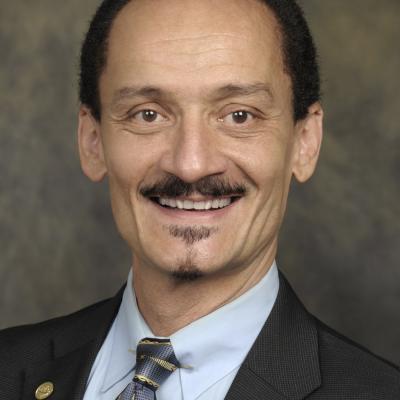
City College of New York alumnus Peter J. Delfyett, Jr., a pre-eminent ultrafast photonics researcher from the Class of 1981, is one of 106 new members and 23 international members elected to the National Academy of Engineering (NAE). This brings the total U.S. membership to 2,355 and the number of international members to 298, NAE President John L. Anderson announced. Election to the NAE is among the highest professional distinctions accorded to an engineer. Academy membership honors those who have made outstanding contributions to "engineering research, practice, or education, including
The City College of New York is partnering with three other institutions in an innovative effort to address the low participation of Black, Indigenous and People of Color (BIPOC) in cancer clinical trials. Dubbed the SU2C Health Equity Breakthrough Team; CCNY, lead institute Mount Sinai Hospital, the Albert Einstein Cancer Center and Columbia University’s Herbert Irving Comprehensive Cancer Center, begin the project with $6 million in support from Stand Up To Cancer® (SU2C), which funds new and promising cancer research treatments. “Cancer research has made tremendous progress but has not
The year was 1921, and the world was still reeling from the Spanish flu that had claimed 50 million lives, including nearly 700,000 Americans, in the previous three years. At The City College of New York, the nation’s first tuition-free college when it was founded in 1847, two major events occurred in 1921. In April of that year, the great physicist Albert Einstein stood before an enthusiastic audience at City College and delivered his first-ever lecture in the United States. Later that year, the School of Education (SOE) was established, opening a new chapter in pedagogy at CCNY. The SOE was
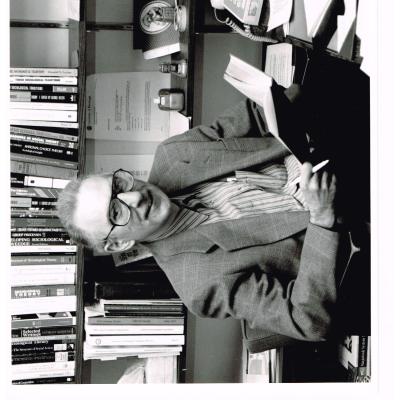
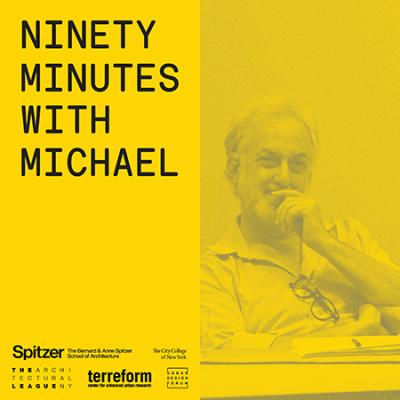
On March 26, The City College of New York’s Bernard and Anne Spitzer School of Architecture presents “Ninety Minutes with Michael” celebrating the life of Michael Sorkin, a distinguished professor and director emeritus of the Graduate Program in Urban Design. The virtual event is free and open to the public and looks back at Sorkin’s life as an urbanist, critic and mentor. On the first anniversary of his passing, due to Covid-19, Sorkin’s comrades—Trevor Boddy, Teddy Cruz, Fonna Forman, Eyal Weizman, Sharon Zukin and his wife Joan Copjec—will gather to consider: What would Michael call on us
Unemployed and underemployed residents of the South Bronx can soon look forward to receiving training and seeking full-time job opportunities in the environmental field, thanks to a City College of New York program funded by the Environmental Protection Agency [EPA]. CCNY is the recipient of a three-year $200,000 Environmental Workforce Development and Job Training (EWDJT) grant from the EPA to create a skilled workforce in communities where brownfields assessment and cleanup activities are taking place. Working in conjunction with the Office of Continuing and Professional Studies on campus
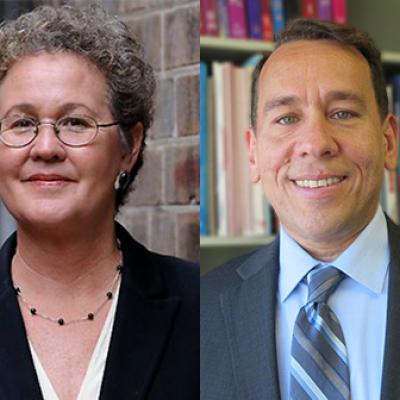
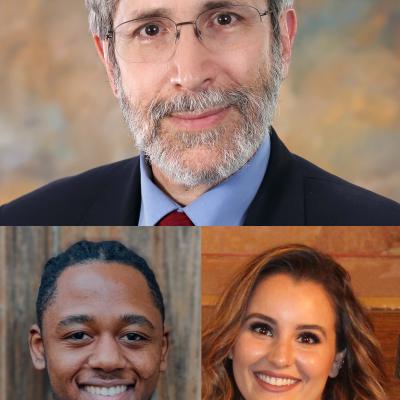
Caleb Garard and Cameron E. Morales, second-year students in the CUNY School of Medicine (CSOM) at The City College of New York, are the first recipients of the Dorothy and Max Bendich Student Research Fellowship. The award has been established by pediatric specialist and CCNY Class of 1971 alumnus David Bendich, MD, in honor of his parents. It will support exceptional students showing an interest in science education and clinical research. Fellows will receive $3,000 per semester each for expenses incurred while engaged in assigned research. Bendich, who initially studied music at CCNY before
While COVID’s often deadly outcome has resulted in the worst pandemic in a century, studies are unveiling a post-COVID phase for survivors during which neuropsychiatric symptoms, such as fatigue, anxiety and depression, can occur. How to treat this debilitating phase, called NeuroCOVID, is the challenge City College of New York biomedical engineer Marom Bikson and his team are tackling. The first stage of COVID is characterized by fever, heart or lung problems. NeuroCOVID is second stage, characterized by one or a combination of symptoms like vertigo, loss of smell, headaches, fatigue and
The City College of New York celebrates Women’s History Month 2021 with a plethora of events including a kickoff event discussing sorority life and leadership, presentations from women leaders in medicine as well as discussions of art and architecture. The schedule of virtual events is as follows: Womxn's Herstory Month (WHM) Kickoff is a discussion about leadership and sorority life presented by the Department of Student Life & Leadership Development in collaboration with Alpha Kappa Alpha Sorority, Inc. | Lambda Chapter on Thursday, March 4 from 12:30-1:30 p.m. Please RSVP at tinyurl.com
City College of New York physicist Alexander Khanikaev is the recipient of the National Science Foundation’s rarely given Special Creativity Award. The honor from the Division of Materials Research (DMR) recognizes what the NSF cites as Khanikaev’s “excellent research, productivity, and impact on topologically nontrivial photonic systems and nonlinear photonic nanostructures and plasmonic metamaterials, as well as the broader impacts emanating from a current NSF project.” Recipients of the award, who are considered the most creative of investigators, receive an automatic two-year extension of